Stop Selling the Dream: Why Your Real Employer Brand is Created at 3 PM on a Tuesday
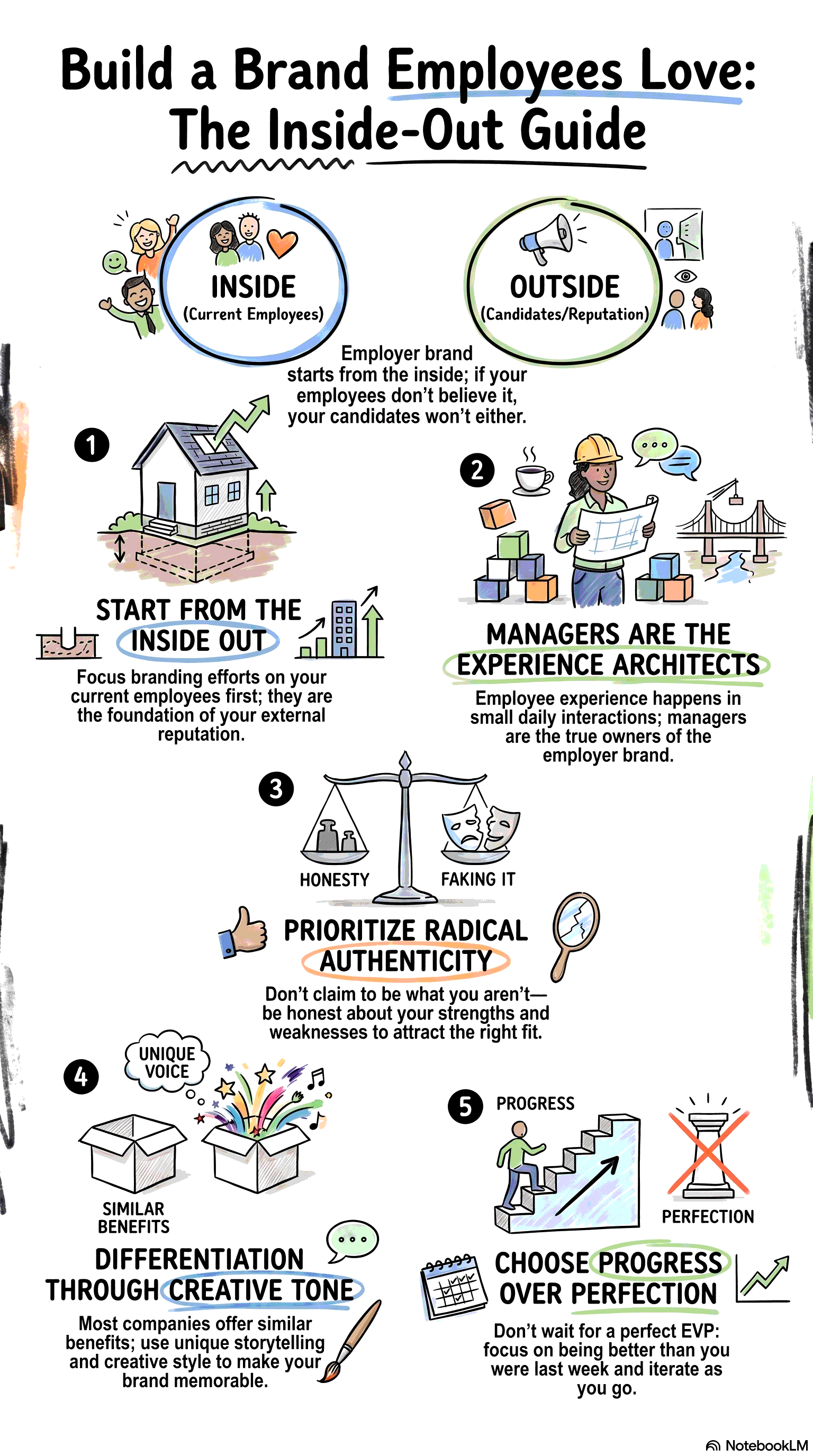
Imagine a regular Tuesday at 3:00 PM. Deadlines are tight, a client is calling, and your key employee needs to leave early for a personal matter. How their direct manager reacts in that exact second is your actual employer brand. It is not created in glossy boardroom presentations or isolated HR strategy sessions; it lives in these raw, real-world micro-moments. If you want to build a truly authentic company, you must become an architect of these moments from the inside out.
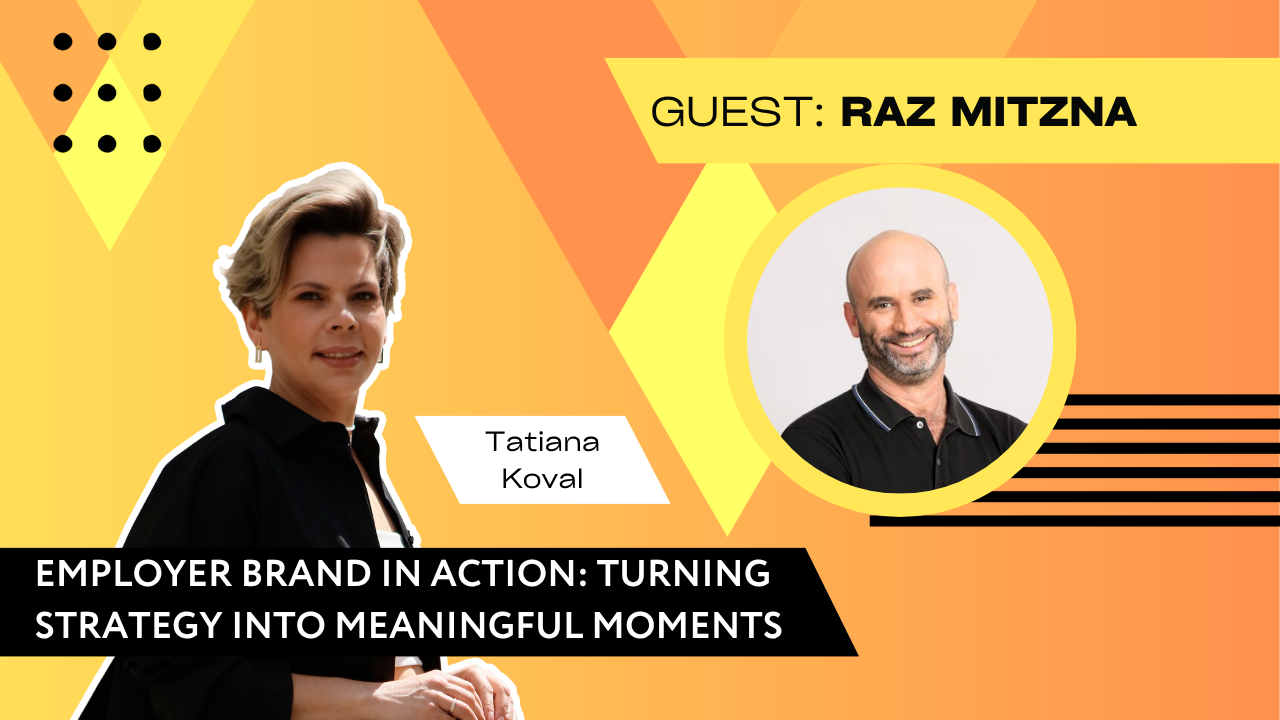
In this episode of the Happy at Work podcast, host Tatiana Koval sits down with Raz Mitzna, a leading international employer branding expert with 11 years of experience. They dive deep into why trying to "sell a dream" to candidates no longer works, and how to instead close internal experience gaps so that your employees naturally become your most passionate brand ambassadors
Achievable recommendations
1. Uncover Your True EVP Gaps Bottom-Up
Run internal roundtables or focus groups to find the "dripping" points — gaps between what the company actually offers and what employees perceive in their daily lives.
2. Move Employer Brand Out of the HR Silo
Establish a dedicated employer brand committee that includes C-level executives and key managers. If you face resistance from leaders who think brand is "only HR's job," start small.
3. Architect the "Tuesday at 3 PM" Manager Touchpoints
Meet with managers to map their daily interactions with teams. Help them understand how to communicate the company's real strengths during these micro-moments and routine touchpoints.
4. Embrace Radical Honesty — Say Who You Are and Who You Are Not
Put the real advantages out there and don't fear cynics. Be honest about your challenges (such as intense hours or a strictly on-site work policy.
5. Differentiate Through Bold Creative and Style, Not Just Perks
Instead of trying to invent a unique benefit, focus on differentiating through brave, creative design, tone of voice, and visual style.
6. Measure Success by Weekly Progress, Not Absolute Perfection
The primary metric of success for an employer brand manager should be: Are our internal communications and employee touchpoints better today than they were last week?
Questions This Episode Answers
- Why is employer brand an organizational development project rather than a short-term marketing campaign?
- How can you successfully engage and train line managers to become active brand ambassadors without administrative pressure?
- How can we apply the lesson of Ernest Shackleton’s legendary, brutally honest Antarctic expedition ad to modern recruitment?
- Is true market differentiation a myth, and how can bold creative execution solve it
Subscribe to our newsletter
Your Brand Happens at 3 PM on a Tuesday
Employer branding is the sum of two distinct forces: organizational and managerial efforts. The organizational effort is the “easy” part—it’s the events, the perks, and the media assets that leadership can control from a boardroom. But the managerial effort is where the brand actually lives or dies.
The reality of your workplace isn’t found in a mission statement on the wall; it’s found in the unscripted micro-moments between a manager and their team. This is “Moment Architecture.”
“Employee experience happens on a Tuesday at 3 p.m. when an employee needs to leave early, but a client is calling. How the manager reacts in that moment—whether they make time, how they perform under pressure—that is your true employer brand.”
Why is the managerial effort so much more impactful? Because it’s the one thing you can’t fully control. You can influence it through training and culture, but you cannot dictate what happens in a private one-on-one. These micro-moments are the “truth” of your organization, and they carry more weight than a thousand corporate town halls.
Your EVP Isn’t Unique, and That’s Okay
We spend months agonizing over a “unique” Employee Value Proposition (EVP), but here is a secret: Differentiation is a myth. Most companies have the same 20 to 30 basic offerings: growth, mission, flexibility, and pay. If you aren’t flying spaceships to Mars, your functional offerings are likely identical to your neighbor’s.
True differentiation doesn’t come from the what; it comes from the tone, style, and creative execution. If the benefits are the same, aesthetic and tonal memory is your only competitive advantage.
Take the “8sters” example: A company (888) transformed a standard culture story into a proprietary “language” using superhero-themed creative. They didn’t change the underlying facts of the job; they changed how the job felt. Being “brave on the creative” is the only way to ensure a candidate remembers you after they’ve applied to ten other roles with the same job description.
The Shackleton Filter: Truth as a Magnet
The most famous job ad in history — Ernest Shackleton’s call for his Antarctic expedition—didn’t promise perks. It promised, “bitter cold, long months of complete darkness, and safe return doubtful.” This is the ultimate lesson in radical honesty.
Weaknesses: Don’t need PR Leadership often feels “self-insecure” about their company’s flaws, but weaknesses don’t need marketing. If your company requires 60-hour workweeks or strict office attendance, lead with it. Selective honesty acts as a powerful filter. It repels talent who will quit in three months and attracts those who “accept the deal.” If 2,000 people work for you, you are doing something right—stop trying to hide the price of admission.
Shifting the Success Story: Employees as Authors
A major global pharma company recently discovered a disturbing gap: despite massive corporate success, their employees were indifferent. They didn’t feel the win. The company was successful, but the employees felt like spectators rather than participants.
To fix this, the narrative must shift. You have to close the gap between corporate achievement and the daily grind by making employees the “presenters” and authors of the success story.
“If you see this medicine being developed and shipped overseas, you need to know it is happening thanks to the people in this room.”
When you move employees from being the audience to being the authors, the brand ceases to be a top-down mandate and becomes a point of internal pride. That pride is the strongest retention tool in your arsenal.
Kill the Perfection Trap with Pilots
Many leaders suffer from “LinkedIn jealousy”—the paralysis that comes from seeing a competitor’s glossy campaign and feeling like their own messaging framework isn’t “ready.” This perfectionism is the enemy of progress.
Stop treating employer branding as a one-off marketing campaign and start viewing it as an organizational development project. The goal isn’t a flawless framework; it’s being better than you were last week.
If you’re stuck, use a Pilot Strategy. Find two or three managers who already “get it” and run small-scale experiments—put them on stages, involve them in creative work, or let them lead the storytelling. Use their success to prove the ROI of branding to the skeptics. Don’t wait for a company-wide consensus that may never come.
Become a Moment Architect
The era of top-down employer branding is over. The brand is built bottom-up, fueled by the authentic voices of your people and the reality of your “Tuesday at 3 PM” culture. Your role as a leader is to stop being a broadcaster and start being an architect of the moments that matter.
What is the “Tuesday at 3 PM” reality at your company? Do you know if the experience you provide in private matches the promises you make in public?